
Knife sharpening angle guides are becoming increasingly popular, assisting both novice and experienced users in achieving professional-level results with ease and precision.
Many knife owners possess dull blades, highlighting a need for accessible sharpening solutions, and these guides offer a straightforward path to a razor-sharp edge.
A sharp knife is a safer and more efficient kitchen tool, and mastering sharpening techniques is crucial for any home cook or outdoor enthusiast.
These guides simplify the process, ensuring consistent angles for optimal performance and longevity of your valuable blades, making sharpening less daunting.
Ultimately, utilizing an angle guide empowers individuals to maintain their knives effectively, enhancing both safety and culinary enjoyment.
Why Use an Angle Guide?
Angle guides dramatically simplify the often-intimidating process of knife sharpening, making it accessible to cooks of all skill levels. Maintaining a consistent angle is paramount for achieving a sharp, durable edge, and guides eliminate the guesswork involved.
Without a guide, achieving the correct angle freehand requires significant practice and a keen eye – something many home cooks simply don’t have time for. Consistent angles are vital because they ensure even wear across the blade, preventing weak spots and prolonging the knife’s lifespan.
Furthermore, using an angle guide minimizes the risk of damaging your knife by accidentally altering its geometry. It’s a safeguard against creating an uneven or weakened edge. For those unfamiliar with sharpening, a guide provides a tangible reference point, fostering confidence and improving results. Ultimately, an angle guide transforms sharpening from a frustrating chore into a manageable and rewarding task.
The Importance of Consistent Angles
Consistent angles are the cornerstone of effective knife sharpening, directly impacting the blade’s performance and longevity. A uniform angle ensures that the entire edge is sharpened equally, creating a smooth, durable cutting surface. Variations in angle lead to an uneven edge, resulting in poor cutting performance and increased susceptibility to chipping or rolling.
Maintaining consistency isn’t merely about sharpness; it’s about the type of sharpness. Different angles are suited for different tasks, and replicating that angle precisely each time is crucial. An inconsistent angle weakens the blade’s structure, diminishing its ability to withstand stress.
Therefore, striving for uniformity during sharpening is paramount. Utilizing tools like angle guides helps achieve this precision, transforming a potentially haphazard process into a controlled and reliable one, ultimately maximizing the knife’s potential.

Understanding Knife Sharpening Angles
Knife sharpening angles dictate a blade’s cutting ability and durability; selecting the correct angle, based on intended use, is vitally important for optimal performance.
Common Knife Angles and Their Uses
Understanding common knife angles is fundamental to effective sharpening, as each degree range caters to specific cutting tasks and blade types. A 15-degree angle, exceptionally acute, is reserved for specialty knives like Japanese single-bevel blades, prioritizing finesse over robustness – ideal for delicate slicing.
Moving up to a 20-degree angle, this is a versatile choice for general-purpose kitchen knives, balancing sharpness and durability well, suitable for everyday tasks like chopping vegetables and trimming meats. Increasing to a 25-degree angle introduces greater strength, making it perfect for heavier-duty knives used for tasks requiring more force, such as carving or butchering.
Finally, a 30-degree angle is employed for rough cutting and chopping, prioritizing durability over extreme sharpness; this is common for cleavers and knives designed for tackling tough materials. Choosing the right angle ensures your knife performs optimally and maintains its edge for longer.
15-Degree Angle ― For Specialty Knives
A 15-degree edge angle is exceptionally acute and primarily utilized for specialized knives demanding ultimate sharpness and precision. These are often Japanese-style blades, such as deba or yanagiba, designed for specific tasks like filleting fish or slicing sashimi with incredible delicacy.
This steep angle creates a very thin edge, resulting in minimal resistance during cutting, but it also makes the blade more prone to chipping or rolling if subjected to hard or twisting forces. Maintaining this angle requires skill and patience, often employing specialized sharpening stones and techniques.
Using an angle guide is particularly beneficial for consistently achieving and preserving this delicate edge. It’s crucial to avoid heavy pressure and prioritize smooth, controlled strokes when sharpening knives at 15 degrees, ensuring longevity and optimal performance.
20-Degree Angle ― For General Purpose Knives
A 20-degree edge angle represents a versatile sweet spot, ideal for the majority of kitchen knives used in everyday cooking. This angle strikes a balance between sharpness and durability, making it suitable for a wide range of tasks, from slicing vegetables to trimming meats.
Knives sharpened to 20 degrees maintain a keen edge while exhibiting sufficient robustness to withstand typical kitchen wear and tear. It’s a practical choice for chef’s knives, paring knives, and utility knives, offering reliable performance without excessive fragility.
Angle guides are exceptionally helpful in consistently achieving this angle, particularly for beginners. Maintaining a steady hand and consistent pressure, guided by the tool, ensures a uniform edge along the entire blade, maximizing its cutting efficiency and lifespan.
25-Degree Angle ౼ For Heavy-Duty Knives
A 25-degree edge angle is specifically suited for knives designed for tougher tasks, offering increased durability at the expense of some initial sharpness. This angle is commonly found on cleavers, butcher knives, and other blades intended for processing dense materials like bone or tough cuts of meat.
The more obtuse angle creates a stronger edge that is less prone to chipping or rolling when encountering resistance. While not as razor-sharp as a 20-degree knife, a 25-degree blade provides reliable performance where sheer cutting power is paramount.
Utilizing an angle guide is crucial when sharpening these heavier blades, ensuring consistent results and preventing accidental damage to the blade or the sharpening stone. Consistent pressure and proper technique, aided by the guide, are key.
30-Degree Angle ― For Rough Cutting/Chopping
A 30-degree sharpening angle is ideal for knives frequently used in demanding, robust cutting and chopping applications. This robust angle prioritizes edge strength and resilience over extreme sharpness, making it perfect for tasks like splitting vegetables, breaking down poultry, or processing tougher ingredients.
Knives sharpened to 30 degrees are less likely to chip or bend during forceful impacts, offering a more durable edge for heavy-duty work. While they won’t glide through delicate items as easily, they excel where power and durability are essential.
Employing a knife sharpening angle guide is particularly beneficial for maintaining this angle consistently, ensuring optimal performance and longevity of the blade. Consistent pressure and slow, deliberate strokes are recommended.
Types of Knife Sharpening Angle Guides
Various angle guides exist, including magnetic, clip-on, handheld, and fixed systems, each offering unique benefits for sharpening knives with precision and consistency.
These tools cater to different skill levels and sharpening preferences, providing options for both beginners and experienced knife enthusiasts.
Magnetic Angle Guides
Magnetic angle guides are a popular choice due to their simplicity and versatility, attaching directly to the blade during the sharpening process.
These guides typically feature a strong magnet that securely holds the guide in place, ensuring a consistent angle throughout each stroke.
They are often adjustable, allowing users to select the desired angle for different knife types and applications, ranging from 15 to 30 degrees or more.
Magnetic guides work well with various sharpening stones and rods, providing flexibility in sharpening methods.
A key advantage is their ease of use – simply attach, sharpen, and detach – making them ideal for beginners.
However, some users may find that the magnetic hold isn’t strong enough for heavier blades or aggressive sharpening techniques, potentially leading to slippage.
Despite this, they remain a cost-effective and convenient option for maintaining a sharp edge on most knives.
Clip-On Angle Guides

Clip-on angle guides offer a secure and stable method for maintaining a consistent sharpening angle, attaching to the spine of the knife blade.
These guides typically feature a clamping mechanism that firmly grips the blade, preventing movement during the sharpening process.
They are often made from durable materials like stainless steel or hardened plastic, ensuring longevity and resistance to wear and tear.
Clip-on guides are generally adjustable, allowing users to select the appropriate angle for different knife types and desired sharpness levels.
A significant benefit is their stability, which minimizes the risk of slippage, even with heavier blades or more forceful sharpening strokes.
However, some models may not be compatible with all blade shapes or sizes, potentially limiting their versatility.
Despite this, clip-on guides provide a reliable and accurate solution for achieving professional-quality sharpening results.
Handheld Angle Guides
Handheld angle guides represent a portable and affordable option for achieving consistent knife sharpening angles, offering flexibility and ease of use.
These guides typically consist of a small, lightweight device held in the hand while sharpening, providing a reference point for blade angle.
They often feature a magnetic or friction-based attachment to the blade, ensuring a secure connection during the sharpening process.
Handheld guides are generally adjustable, allowing users to customize the angle based on the knife type and desired sharpness.
Their compact size makes them ideal for travel or situations where a fixed sharpening system is impractical;
However, maintaining consistent pressure and angle requires more skill and practice compared to other guide types.
Despite this, handheld guides provide a convenient and accessible solution for sharpening knives on the go or for occasional use.
Fixed Angle Sharpening Systems
Fixed angle sharpening systems offer the highest level of precision and consistency, ideal for those seeking professional-grade results with minimal effort.
These systems typically involve a base with pre-set angle slots or adjustable guides that securely hold the blade at a specific angle throughout the sharpening process.
They often incorporate abrasive stones or wheels that are moved along the blade, ensuring even sharpening across the entire edge.
Fixed angle systems eliminate much of the guesswork involved in maintaining a consistent angle, making them suitable for beginners and experienced sharpeners alike.
While generally more expensive and less portable than other guide types, they deliver exceptional sharpness and edge quality.
Many systems accommodate various blade shapes and sizes, offering versatility for different knife collections.
Ultimately, fixed angle systems represent a premium investment for those prioritizing precision, consistency, and long-term sharpening performance.

Using Knife Sharpening Angle Guides
Effectively utilizing a knife sharpening angle guide requires proper setup, consistent pressure application, and mastering fundamental sharpening techniques for optimal blade refinement.
Achieving a sharp edge hinges on these core principles, ensuring safety and maximizing the tool’s potential.
Setting Up the Guide
Proper setup is paramount when employing a knife sharpening angle guide, regardless of the chosen type. Begin by securely attaching the guide to the knife blade, ensuring it’s firmly in place to prevent slippage during the sharpening process.
For magnetic guides, simply align and allow the magnet to hold it steady. Clip-on versions require careful clamping, while handheld guides necessitate a firm grip.
Next, select the desired sharpening angle based on your knife’s intended use – 15, 20, 25, or 30 degrees.
Most guides offer adjustable settings for this purpose.
Double-check that the angle is correctly set before commencing sharpening, as an incorrect angle will yield suboptimal results.
Finally, position the knife and guide comfortably on your sharpening stone, preparing for consistent and controlled strokes.
A stable setup is the foundation for a sharp, reliable edge.
Maintaining Consistent Pressure
Consistent pressure is crucial for effective knife sharpening with an angle guide. Applying even force across the blade ensures uniform material removal, leading to a clean, sharp edge. Avoid excessive pressure, as this can damage the blade or the sharpening stone;
Instead, focus on a moderate, controlled push or pull, letting the abrasive do the work;
Maintain this pressure throughout each stroke, and strive for consistency between strokes.
Varying pressure will result in an unevenly sharpened blade.
Pay attention to the feedback from the guide; it should move smoothly along the blade without binding or resistance.
Regularly assess your pressure to ensure it remains constant, and adjust as needed.
Mastering consistent pressure is key to achieving a professional-quality, durable edge.
Sharpening Techniques with Guides
Employing proper techniques when using knife sharpening angle guides is essential for optimal results. Begin by securing the guide firmly to the blade, ensuring the chosen angle aligns with the knife’s intended purpose.
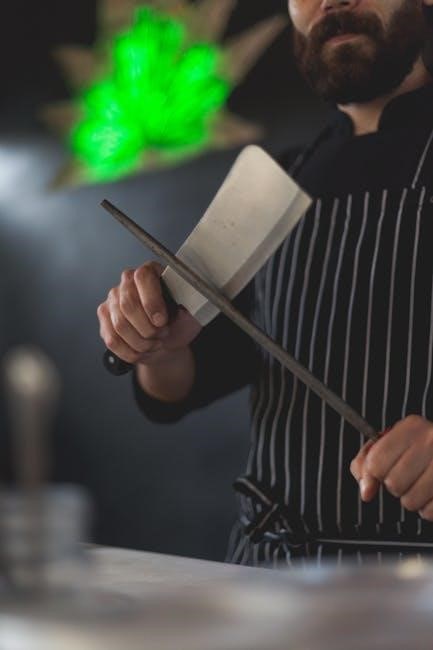
Maintain consistent pressure and a steady stroke, drawing the blade across the sharpening stone.
Alternate sides with each stroke, gradually refining the edge.
Avoid excessive force, allowing the abrasive to do the work.
Focus on maintaining the guide’s contact with both the blade and the stone throughout the process.
For a burr, lightly feel along the edge to detect its formation, indicating sharpening progress.
Once a burr is established, reduce pressure and alternate strokes to remove it.
Finish with stropping to polish the edge and achieve maximum sharpness.
Choosing the Right Angle Guide
Selecting the ideal angle guide depends on your sharpening needs, knife types, and skill level; consider material, compatibility, and ease of adjustment for best results.
Durable materials and compatibility with your stones are key, alongside user-friendly adjustments for a consistently sharp edge.
Material and Durability
The material of a knife sharpening angle guide significantly impacts its longevity and performance; commonly, you’ll find guides constructed from materials like plastic, aluminum, or stainless steel.
Plastic guides are often the most affordable, suitable for occasional use, but may lack the robustness needed for frequent or demanding sharpening sessions.
Aluminum guides strike a balance between cost and durability, offering a reasonable lifespan with moderate use, and resisting corrosion effectively.
Stainless steel guides represent the premium option, providing exceptional durability, resistance to wear and tear, and often, greater precision.
Investing in a higher-quality, more durable material, like stainless steel, is particularly beneficial for those who sharpen knives regularly or work with harder blade steels.
Consider the guide’s construction – a solid, well-built guide will withstand consistent pressure and maintain its shape, ensuring accurate and repeatable sharpening angles over time.
Ultimately, prioritizing material and durability translates to a more reliable and long-lasting sharpening tool.
Compatibility with Sharpening Stones
Ensuring compatibility between your knife sharpening angle guide and sharpening stones is crucial for optimal results; not all guides work seamlessly with every stone type or size.
Many guides are designed to function with a broad range of stones, including whetstones, diamond stones, and ceramic stones, but it’s essential to verify beforehand.
Consider the guide’s base – a flat base is generally more versatile, accommodating various stone surfaces, while contoured bases may limit compatibility.
The guide’s clamping mechanism or attachment method should securely grip the stone without causing slippage during sharpening, maintaining consistent angles.
Some guides are specifically designed for use with particular sharpening systems, offering enhanced stability and precision within that ecosystem.
Check product specifications and user reviews to confirm compatibility with your preferred sharpening stones, avoiding potential frustration and ensuring effective sharpening.
Proper compatibility maximizes the guide’s effectiveness and contributes to a sharper, more refined blade edge.
Ease of Use and Adjustment
A key factor when selecting a knife sharpening angle guide is its ease of use and how readily it allows for angle adjustments. Simplicity is paramount, especially for beginners.
Guides with intuitive designs and clear markings for common angles (15, 20, 25 degrees) streamline the sharpening process, minimizing the learning curve.
Look for guides that offer quick and secure angle locking mechanisms, preventing unwanted shifts during sharpening and ensuring consistent results.
The ability to fine-tune the angle is also beneficial, accommodating different blade types and sharpening preferences.
Avoid guides with overly complex adjustment systems or flimsy construction, as these can hinder precision and create frustration.
User-friendly guides empower individuals to confidently sharpen their knives, achieving professional-quality edges with minimal effort and maximizing sharpening efficiency.
A smooth, intuitive experience encourages regular knife maintenance.
Troubleshooting Common Issues
Sharpening with guides isn’t always seamless; slipping can occur, and achieving a truly consistent edge requires practice and attention to detail.
Addressing these challenges is key to mastering the technique and enjoying perfectly sharpened blades consistently.
Guide Slipping During Sharpening
A common frustration when using knife sharpening angle guides is the tendency for the guide to slip during the sharpening stroke. This often happens due to insufficient pressure applied to secure the guide firmly against the blade, or because the sharpening surface isn’t perfectly clean and free of debris.
To mitigate slipping, ensure you’re applying consistent, moderate downward pressure throughout each stroke. A slightly tacky surface on the guide itself can also improve grip. Regularly cleaning both the blade and the guide with a degreasing agent will remove oils and particles that contribute to slippage.
Furthermore, consider the type of guide; magnetic guides generally offer a more secure hold than clip-on versions. If slippage persists, experiment with slightly adjusting your hand position to maximize stability and control during the sharpening process.
Achieving a Consistent Edge
The primary goal of using a knife sharpening angle guide is to achieve a consistently sharp edge along the entire blade length. Maintaining a uniform angle is paramount, and guides help enforce this. However, the guide is only a tool; consistent technique is equally vital.
Focus on slow, deliberate strokes, ensuring the guide remains flush against the blade throughout the entire movement. Avoid varying pressure, as this can lead to uneven sharpening. Regularly inspect your progress by gently testing the blade’s sharpness on a piece of paper or fruit.
Remember to sharpen both sides of the blade equally, maintaining the same number of strokes on each side. Patience and attention to detail are key to achieving a truly consistent and razor-sharp edge.

Advanced Considerations
Experienced users can combine angle guides with other sharpening tools for refined results, adapting techniques to diverse blade shapes and steel types for optimal performance.
Mastering these nuances elevates sharpening beyond basic maintenance, unlocking a knife’s full potential and extending its lifespan considerably.
Sharpening Different Blade Shapes
Adapting to blade geometry is crucial when using knife sharpening angle guides; not all knives are created equal, and a one-size-fits-all approach won’t deliver optimal results.
For example, a curved blade, like a chef’s knife, requires a rolling motion alongside the guide to maintain consistent contact, while a straight blade benefits from a more linear pass.
Serrated knives present a unique challenge, as angle guides aren’t typically designed for their distinct tooth pattern; specialized tools are generally recommended for these.
Furthermore, understanding the blade’s profile – whether it’s a flat grind, hollow grind, or convex grind – influences how you utilize the guide and apply pressure.
A convex grind, common in Japanese knives, demands a slightly different technique to preserve its curvature, often requiring more finesse and a lighter touch.
Experimentation and observation are key; carefully assess the blade’s shape and adjust your technique accordingly to achieve a uniformly sharp edge across its entire length.
Ultimately, successful sharpening hinges on recognizing and accommodating the unique characteristics of each blade.
Combining Angle Guides with Other Sharpening Tools
Synergistic sharpening involves strategically pairing angle guides with complementary tools to refine and maintain a knife’s edge, maximizing sharpness and longevity.
For instance, using a coarse grit sharpening stone with a guide to establish the initial bevel, followed by a honing steel to refine and align the edge, yields exceptional results.
Angle guides excel at consistency, while stropping on leather removes burrs and polishes the blade to a mirror finish, enhancing its cutting performance.
Diamond pastes can also be applied during the stropping phase for even greater refinement and a lasting, razor-sharp edge.
Employing a guide during initial sharpening stages ensures a precise angle, while subsequent freehand honing allows for nuanced adjustments.
This combined approach leverages the strengths of each tool, creating a comprehensive sharpening system tailored to your needs.
Ultimately, integrating angle guides into a broader sharpening routine elevates your knife care to a professional level.