

The Butterfly Lovers Violin Concerto PDF: A Comprehensive Guide
This guide delves into accessing the Butterfly Lovers Violin Concerto in PDF format, exploring its history, musical intricacies, and resources for violinists seeking scores.
Discover legitimate purchasing options, cautionary notes regarding free online resources, and considerations regarding copyright and PDF quality for optimal study.
Historical Context of the Concerto
The Butterfly Lovers Violin Concerto, a cornerstone of 20th-century Chinese classical music, emerged during a period of significant cultural and political change in China. Composed in 1959 by He Zhanhao and Chen Gang, the concerto wasn’t simply a musical creation; it was a bold artistic statement born from the aftermath of the Chinese Revolution.
Prior to its creation, Western classical music was largely absent from the Chinese musical landscape. The composers, both trained in Western musical traditions, sought to bridge this gap, creating a work that blended Western harmonic and structural principles with distinctly Chinese melodic and thematic elements. The concerto’s narrative, deeply rooted in the tragic folk tale of Liang Shanbo and Zhu Yingtai – often called the “Chinese Romeo and Juliet” – resonated powerfully with audiences.

Interestingly, despite its immediate popularity within China, the concerto experienced limited exposure internationally for many years. Its rediscovery and subsequent rise in global recognition highlight its enduring artistic merit and its unique position as a cultural ambassador.
The Legend of Liang Shanbo and Zhu Yingtai
At the heart of the Butterfly Lovers Violin Concerto lies the poignant Chinese legend of Liang Shanbo and Zhu Yingtai, a tale of love, societal constraints, and tragic transformation. Zhu Yingtai, disguising herself as a man, attends school – a privilege denied to women at the time – and forms a deep bond with her classmate, Liang Shanbo.
Unaware of Zhu Yingtai’s true identity, Liang Shanbo develops romantic feelings, which she reciprocates. However, societal pressures and her arranged marriage to another man prevent them from being together. Upon discovering her deception and the impending marriage, Liang Shanbo dies of a broken heart.
In a final act of defiance and eternal love, Zhu Yingtai, on her wedding day, insists on visiting Liang Shanbo’s grave, where a sudden storm erupts. She throws herself onto his tomb, and the graves open, transforming the lovers into a pair of butterflies, symbolizing their freedom and everlasting union.
He Zhanhao and Chen Gang: The Composers
He Zhanhao and Chen Gang, both prominent Chinese composers, collaboratively created the Butterfly Lovers Violin Concerto in 1959 during their studies at the Shanghai Conservatory. This work stands as one of the most celebrated and frequently performed Chinese compositions for Western instruments.
Inspired by the classic Chinese legend, the composers aimed to blend traditional Chinese musical elements with Western orchestral techniques. Zhanhao, specializing in orchestration, and Gang, a violinist, brought complementary skills to the project. Their innovative approach resulted in a concerto that vividly portrays the narrative and emotional depth of the story.
The concerto quickly gained recognition, becoming a symbol of Chinese classical music and achieving international acclaim. It’s a testament to their artistic vision and a landmark achievement in cross-cultural musical expression, often performed in competitions and concerts worldwide.
Compositional Style and Influences
The Butterfly Lovers Violin Concerto exhibits a unique compositional style, skillfully merging Western harmonic and structural principles with distinctly Chinese melodic and timbral elements. He Zhanhao and Chen Gang drew heavily from traditional Chinese opera, folk music, and regional instrumental styles, particularly those of the Zhejiang province, reflecting the legend’s origins;
Pentatonic scales and ornamentation characteristic of Chinese music are prominent, alongside techniques like glissando to mimic traditional string instruments. The orchestration incorporates elements evocative of Chinese percussion and melodic instruments. While rooted in Chinese aesthetics, the concerto adheres to a Western concerto form, featuring four movements with contrasting characters.
Influences also include the works of Western composers like Tchaikovsky and Rachmaninoff, evident in the concerto’s romantic expressiveness and virtuosic violin writing. This fusion creates a compelling and emotionally resonant musical language.
The Premiere and Initial Reception
The Butterfly Lovers Violin Concerto premiered in 1959, a period of significant cultural and political change in China. Its initial reception was overwhelmingly positive, quickly establishing it as a landmark work in Chinese classical music. The concerto resonated deeply with audiences, captivated by its poignant portrayal of the tragic love story and innovative musical language.
Performances rapidly spread throughout China, and it soon became a staple in the repertoire of leading orchestras and violinists. However, during the Cultural Revolution, the work faced scrutiny due to its perceived “bourgeois” elements. Despite these challenges, its artistic merit ensured its survival and eventual resurgence.
Interestingly, the concerto isn’t frequently heard in Australia, despite its global recognition and continued performance in countless competitions and concerts worldwide.
Musical Structure of the Concerto
The Butterfly Lovers Violin Concerto is structured in four distinct movements, each vividly depicting a stage in the tragic tale of Liang Shanbo and Zhu Yingtai. Movement I, “Spring Sorrow” (Chun Xiang Si), introduces the main themes and establishes the atmosphere of budding love and underlying sadness. Movement II, “The Joy of Love” (Yue Lai Si), portrays the blossoming romance with lively melodies and vibrant orchestration.
The third movement, “Sorrowful Separation” (Heng Wan Si), dramatically conveys the heartbreak of their forced separation, utilizing dissonant harmonies and expressive violin passages. Finally, “Reunion and Transformation” (Huan Yan Si), depicts their ultimate union in death and transformation into butterflies, culminating in a powerful and emotionally charged finale.
The PDF score reveals how composers He Zhanhao and Chen Gang masterfully weave traditional Chinese melodies with Western orchestral techniques, creating a unique and compelling musical narrative.
Movement I: Spring Sorrow (Chun Xiang Si)
“Spring Sorrow” (Chun Xiang Si), the concerto’s opening movement, establishes a melancholic yet hopeful tone. The PDF score reveals a delicate interplay between the solo violin and the orchestra, representing the initial, unspoken affection between Liang Shanbo and Zhu Yingtai. Traditional Chinese pentatonic scales are prominent, lending an authentic folk flavor.
The movement begins with a lyrical violin solo, expressing Shanbo’s quiet admiration for Yingtai. The orchestral accompaniment builds gradually, mirroring the blossoming of their friendship. The PDF allows detailed study of the composer’s use of ornamentation and expressive phrasing, crucial for conveying the movement’s emotional depth.
Subtle harmonic shifts foreshadow the tragedy to come, hinting at the obstacles that will ultimately separate the lovers. Studying the PDF provides insight into the nuanced dynamics and tempo markings, vital for a compelling performance.
Movement II: The Joy of Love (Yue Lai Si)
“The Joy of Love” (Yue Lai Si) bursts forth with vibrant energy, depicting the blossoming romance between Liang Shanbo and Zhu Yingtai. A PDF score examination reveals a lively allegro tempo and a more prominent role for the orchestra, symbolizing the couple’s shared happiness. The movement showcases virtuosic violin passages, representing the exhilaration of newfound love.
The PDF allows close analysis of the intricate interplay between the violin and orchestral melodies, highlighting the composers’ masterful use of counterpoint. Traditional Chinese folk tunes are interwoven into the musical fabric, adding a layer of cultural authenticity. Detailed bowings and fingerings within the PDF are essential for navigating the technically demanding passages;
This movement is characterized by its playful character and optimistic spirit, though subtle undercurrents of foreshadowing hint at the impending sorrow. The PDF provides invaluable insight into the dynamic contrasts and expressive nuances crucial for a captivating performance.
Movement III: Sorrowful Separation (Heng Wan Si)
“Sorrowful Separation” (Heng Wan Si) marks a dramatic shift in mood, portraying the heartbreaking realization of Zhu Yingtai’s impending marriage to another. A PDF score reveals a slower tempo and a predominantly melancholic tone, achieved through poignant melodic lines and harmonic progressions. The violin takes on a lamenting quality, expressing Shanbo’s despair.
The PDF facilitates a detailed study of the composers’ use of dissonance and chromaticism to convey emotional turmoil. The orchestral accompaniment becomes more subdued, mirroring Shanbo’s isolation. Analyzing the PDF’s notation reveals subtle dynamic shifts and expressive markings crucial for conveying the movement’s profound sadness.
This movement is arguably the concerto’s emotional core, demanding exceptional sensitivity from the violinist. The PDF provides a roadmap for navigating the technically challenging passages while maintaining a deeply expressive interpretation, capturing the tragedy of unrequited love.
Movement IV: Reunion and Transformation (Huan Yan Si)
“Reunion and Transformation” (Huan Yan Si) represents the culmination of the tragic love story, depicting the lovers’ rebirth as butterflies. A PDF score unveils a return to a faster tempo, though imbued with a bittersweet quality. The violin soars with renewed energy, symbolizing their liberation from earthly constraints.
The PDF allows close examination of the composers’ masterful orchestration, featuring shimmering textures and soaring melodies that evoke the image of fluttering wings. Analyzing the PDF’s notation reveals the use of pentatonic scales and traditional Chinese musical motifs, reinforcing the cultural context.
This movement is a powerful display of musical storytelling, demanding both technical brilliance and emotional depth from the violinist. The PDF provides insight into the intricate interplay between the solo violin and the orchestra, culminating in a triumphant, yet poignant, finale.
Finding a PDF Score of the Concerto
Locating a PDF score of the Butterfly Lovers Violin Concerto requires careful navigation. While readily available online, the quality and legality of sources vary significantly. A comprehensive search using specific keywords – “Butterfly Lovers Violin Concerto PDF score,” “He Zhanhao Chen Gang PDF,” or “ PDF” – is a starting point.
However, be cautious of websites offering free downloads, as these may contain incomplete, inaccurate, or illegally distributed versions. PDF quality can range from clear, professionally typeset scores to blurry, scanned copies. Prioritize sites known for legitimate musical publications.
Exploring online music retailers and digital sheet music platforms often yields reliable PDF options, though typically requiring a purchase. Checking university libraries or conservatories’ online resources may also uncover accessible scores.
Legitimate Sources for Purchasing the PDF
Several reputable sources offer the Butterfly Lovers Violin Concerto PDF for purchase, ensuring quality and legal access. Musicnotes.com and Sheet Music Plus are prominent digital sheet music retailers frequently stocking the concerto’s score. These platforms typically provide preview options, allowing assessment before buying.
Directly contacting music publishers specializing in Chinese classical music can also yield reliable PDF versions. International Music Company or similar distributors may offer the score. University music libraries sometimes sell copies of their holdings, potentially including a digital PDF.
Consider exploring websites of established violin instruction resources; they occasionally offer curated sheet music collections. Purchasing from legitimate sources supports composers and ensures a high-quality, accurate score for study and performance.
Free Online Resources (Cautionary Notes)
While numerous websites claim to offer free PDF scores of the Butterfly Lovers Violin Concerto, exercising extreme caution is crucial. Many such sources infringe copyright, providing inaccurate or incomplete transcriptions. These PDFs may contain errors, missing sections, or poor formatting, hindering effective study.
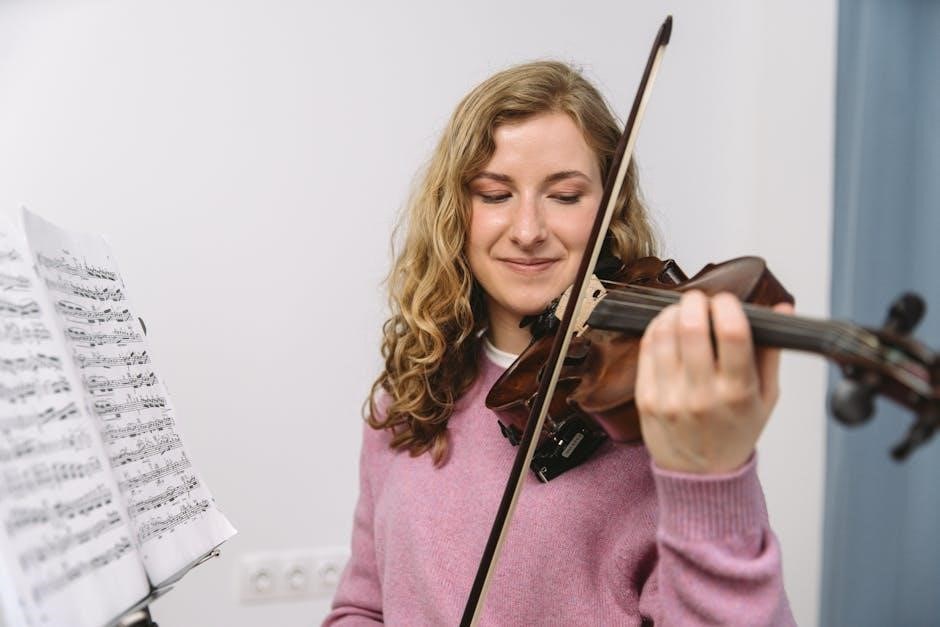
Beware of sites with suspicious URLs or excessive advertising. Downloading from untrusted sources risks malware or viruses. Free sheet music archives sometimes host user-submitted scores, which may lack professional verification. Always cross-reference with a reliable source if utilizing a free PDF.
Remember that accessing copyrighted material without permission is illegal. Supporting composers and publishers through legitimate purchases ensures continued creation and availability of quality scores. Prioritize legal options whenever possible.
Copyright Considerations and Fair Use
The Butterfly Lovers Violin Concerto remains under copyright protection, meaning unauthorized reproduction and distribution of the PDF score are generally prohibited. Copyright typically belongs to the composers’ estates or assigned publishers, safeguarding their intellectual property rights.
Fair use doctrines may permit limited use of copyrighted material for purposes like scholarly research, educational instruction, or critical review. However, simply downloading a full PDF score for personal use generally doesn’t qualify as fair use.
Purchasing a legitimate PDF license grants specific usage rights defined by the seller. Respecting copyright encourages composers and ensures the continued availability of musical works. Violating copyright can lead to legal consequences, including fines and penalties.
PDF Quality and Editing Options
The quality of a Butterfly Lovers Violin Concerto PDF score significantly impacts its usability for study and performance. High-resolution scans or digitally typeset scores offer clearer notation, crucial for intricate passages. Low-quality PDFs may exhibit blurry notes or illegible fingerings.

Editing options vary depending on the PDF software used. Some programs allow adding annotations, highlighting, or marking bowings and fingerings directly onto the score. However, altering the original musical notation is generally discouraged unless for personal practice markings.
Consider PDF editors with Optical Music Recognition (OMR) capabilities, which can convert scanned images into editable music notation. Ensure the PDF is searchable, enabling quick location of specific sections or themes within the concerto.
Technical Aspects for Violinists
The Butterfly Lovers Violin Concerto presents unique technical challenges for violinists. Its demanding passages require a solid foundation in advanced techniques, including spiccato, ricochet, and rapid string crossings. The concerto’s lyrical melodies necessitate expressive vibrato and nuanced phrasing.
Violinists should pay close attention to intonation, particularly in the emotionally charged sections depicting the lovers’ separation and transformation. The score often features double stops and extended techniques, demanding precise finger placement and bow control.

PDF versions should clearly display fingerings and bowings to aid in technical execution. Accessing a score with detailed markings from experienced performers can be invaluable. Mastering the concerto requires diligent practice and a deep understanding of its musical narrative.
Difficulty Level and Required Skills
The Butterfly Lovers Violin Concerto is generally considered an advanced-level piece, demanding significant technical proficiency and musical maturity. Violinists attempting this concerto should possess at least several years of dedicated study and a strong command of fundamental techniques.
Required skills include a secure left-hand technique for navigating complex passages, a refined bowing technique for expressive phrasing, and excellent sight-reading abilities to interpret the score accurately. The concerto’s emotional depth also necessitates a developed musical sensibility and interpretive skills.
A PDF score won’t diminish the inherent difficulty, but a well-edited version can aid learning. Successful performance requires stamina, precision, and the ability to convey the tragic love story through musical expression.
Common Performance Challenges
Performing the Butterfly Lovers Violin Concerto presents several challenges, even for seasoned violinists. One significant hurdle is maintaining lyrical phrasing throughout technically demanding passages, particularly in the faster movements. The concerto’s emotional range requires nuanced dynamics and expressive vibrato, demanding careful interpretation.
Another difficulty lies in coordinating with the orchestral accompaniment, ensuring a balanced and cohesive sound. Accurate intonation is crucial, especially in the emotionally charged melodic lines. A PDF score, while helpful, doesn’t address these performance nuances.
Violinists may struggle with the concerto’s extended high positions and rapid string crossings. Mastering these technical aspects while preserving musicality is key to a compelling performance.
Bowings and Fingerings in the PDF
A PDF score of the Butterfly Lovers Violin Concerto often includes suggested bowings and fingerings, though these can vary significantly between editions and performers’ preferences. Examining multiple sources is advisable, as no single fingering is universally “correct.” The quality of the PDF impacts clarity; poorly scanned scores may render markings illegible.
Violinists should critically evaluate provided fingerings, adapting them to their hand size and technical strengths. Consider alternative bowings to optimize phrasing and sound production. The concerto’s demanding passages often benefit from carefully chosen bow distributions.
Remember that PDF fingerings are suggestions, not rigid rules. Experienced players often customize them for greater comfort and musical expression. Supplementing the PDF with recordings and guidance from a teacher is highly recommended.
Orchestral Accompaniment Considerations
When utilizing a Butterfly Lovers Violin Concerto PDF for performance, securing a complete orchestral score and parts is crucial. The PDF typically contains only the solo violin part; orchestral materials are sold separately. Ensure the edition of the orchestral score aligns with the violin PDF to avoid discrepancies in page layouts or markings.
Rehearsing with a piano reduction is helpful for initial learning, but a full orchestral rehearsal is essential for capturing the concerto’s rich textures and dramatic impact. Pay close attention to balance between the soloist and orchestra, particularly during lyrical passages.
Communication with the conductor regarding phrasing, dynamics, and tempo is vital. The orchestral accompaniment is integral to conveying the concerto’s narrative and emotional depth, demanding a collaborative approach.
The Concerto’s Cultural Significance
The Butterfly Lovers Violin Concerto transcends mere musical composition; it embodies a poignant Chinese legend, resonating deeply within the nation’s cultural identity. Its PDF availability allows wider access to this iconic work, fostering appreciation for Chinese classical music globally. The concerto’s narrative, based on Liang Shanbo and Zhu Yingtai, symbolizes enduring love and tragic fate.
Composed during a period of cultural upheaval, the concerto represented a bridge between Western musical techniques and traditional Chinese storytelling. Its success marked a significant moment in the development of Chinese orchestral music, inspiring subsequent composers.
The PDF’s circulation contributes to preserving and promoting this cultural treasure, ensuring its continued relevance for future generations. It stands as a testament to the power of music to convey universal themes of love, loss, and transformation.
Impact on Chinese Classical Music
The Butterfly Lovers Violin Concerto profoundly impacted Chinese classical music, representing a pivotal moment in its modernization and international recognition. Its PDF score’s accessibility has facilitated study and performance, furthering its influence on contemporary composers. Prior to its creation, Chinese orchestral works often lacked the narrative depth and emotional resonance achieved in this concerto;
The concerto demonstrated the successful fusion of Western harmonic and structural principles with distinctly Chinese melodic and thematic elements. This innovative approach paved the way for a new generation of Chinese composers to explore similar stylistic combinations.
The widespread availability of the PDF has encouraged a renewed interest in Chinese orchestral repertoire, inspiring musicians to explore and perform other works within the genre. It remains a cornerstone of the Chinese classical canon.
International Recognition and Performances
The Butterfly Lovers Violin Concerto quickly gained international acclaim following its premiere, becoming a celebrated work in violin repertoire worldwide. The availability of its PDF score has significantly contributed to this global reach, enabling performances by orchestras and soloists across continents. Notably, virtuoso Joshua Bell has championed the concerto, introducing it to new audiences.
Performances have been documented in numerous countries, including the United States, Europe, and Australia, where, despite its significance, it wasn’t frequently heard until recently. Access to the PDF allows musicians unfamiliar with the piece to readily learn and program it.
Its emotionally compelling narrative and unique blend of Eastern and Western musical traditions resonate with diverse audiences, solidifying its place as a modern classic. The concerto’s PDF continues to fuel its international presence.
The Concerto in Violin Repertoire
The Butterfly Lovers Violin Concerto has steadily ascended in prominence within the standard violin repertoire, though its journey hasn’t been without unique challenges. The readily available PDF score has been instrumental in broadening its accessibility for violinists globally, fostering increased study and performance.
While not as ubiquitous as concertos by Beethoven or Mendelssohn, its distinct cultural significance and compelling musical narrative have secured its position. The PDF format allows for convenient practice and analysis, aiding musicians in mastering its technical demands.
Its inclusion in competitions and concert programs, though historically less frequent in Australia, is growing, demonstrating its expanding recognition. The concerto’s PDF ensures its continued presence in the hands of aspiring and established violinists alike, solidifying its place in the modern repertoire.
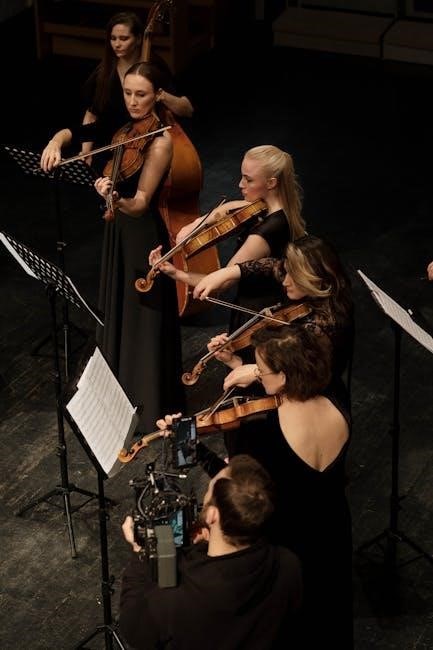
Representations in Other Media (Film, Dance)
The enduring tale of the Butterfly Lovers, deeply intertwined with the concerto, has inspired numerous adaptations across various media. While direct representations specifically utilizing the concerto’s PDF score in film or dance are less documented, the underlying legend is frequently portrayed;
The story’s dramatic arc – love, separation, and tragic transformation – lends itself beautifully to ballet and modern dance interpretations. Access to the concerto’s PDF allows choreographers to synchronize movements precisely with the music’s emotional peaks and valleys.

Film adaptations of the legend often feature musical scores drawing inspiration from the concerto’s themes, even if not a direct performance. The PDF serves as a valuable resource for composers creating derivative works, ensuring fidelity to the original’s spirit and melodic contours, enriching cross-media storytelling.
Butterfly Symbolism in the Music
The Butterfly Lovers Violin Concerto profoundly embodies the legend’s central metaphor: the transformation of star-crossed lovers into butterflies; Analyzing the PDF score reveals how composers He Zhanhao and Chen Gang musically depict this metamorphosis. Recurring melodic motifs, initially representing longing and separation, evolve into lighter, more ethereal passages.
These musical shifts mirror the lovers’ ascent and ultimate freedom from earthly constraints. The violin’s soaring melodies, particularly in the final movement, evoke the fluttering of wings and the delicate beauty of butterflies. Access to the PDF allows musicians to trace these thematic developments, understanding how musical elements symbolize the lovers’ spiritual journey.
The concerto isn’t merely illustrative; it is the transformation, expressed through harmonic changes and dynamic contrasts, offering a poignant musical representation of the butterfly motif.
Connection to the Butterfly Motif
The Butterfly Lovers Violin Concerto’s core narrative directly links to the butterfly as a symbol of enduring love and freedom from societal constraints. Examining the PDF score illuminates how the composers intricately weave this motif throughout the four movements. Specifically, the final movement, “Reunion and Transformation,” explicitly portrays the lovers’ metamorphosis into butterflies.
Musical phrases mimic the flight of butterflies, utilizing delicate tremolos and ascending scales. The PDF allows detailed study of these passages, revealing how the violin’s timbre and melodic contours evoke the image of fluttering wings. Furthermore, the concerto’s overall structure mirrors the life cycle of a butterfly – from initial longing to ultimate liberation.
Accessing the score provides a deeper understanding of how the butterfly isn’t just a symbolic ending, but an integral part of the concerto’s musical language.
Musical Depiction of Transformation
The Butterfly Lovers Violin Concerto’s PDF score vividly demonstrates the musical depiction of transformation, particularly in the final movement. Analyzing the score reveals how composers He Zhanhao and Chen Gang utilize ascending melodic lines and increasingly complex harmonies to represent the lovers’ spiritual ascent. Specifically, the violin’s soaring passages symbolize their liberation from earthly constraints.
The use of tremolo and rapid arpeggios in the PDF’s notation evokes the fluttering of butterfly wings, visually and aurally representing metamorphosis. Furthermore, the shift from minor to major keys signifies a transition from sorrow to joy, mirroring the lovers’ ultimate reunion. Studying the orchestral arrangement within the PDF highlights how other instruments support this transformation.
The PDF allows musicians to trace the development of thematic material, showcasing how initial motifs evolve into representations of freedom and eternal love.
Thematic Development and Butterfly Imagery
The Butterfly Lovers Violin Concerto’s PDF score showcases masterful thematic development intrinsically linked to butterfly imagery. Examining the PDF reveals recurring melodic fragments representing Liang Shanbo and Zhu Yingtai’s love, initially presented simply, then undergoing complex variations. These variations mirror the lovers’ evolving emotions and ultimately, their transformation.
The score’s annotations demonstrate how composers He Zhanhao and Chen Gang employ specific musical techniques – like fragmentation and inversion – to symbolize the obstacles hindering the couple. Notably, the fluttering motifs, clearly visible in the PDF’s notation, directly evoke the butterfly’s flight, representing freedom and transcendence.
Analyzing the PDF reveals how these butterfly-inspired motifs become increasingly prominent in the final movement, culminating in a triumphant and ethereal expression of their unified spirit. The PDF provides a detailed roadmap of this thematic journey.
Butterflies and Lepidoptera: A Brief Overview

Understanding the broader context of butterflies – belonging to the order Lepidoptera – enriches appreciation of the Butterfly Lovers Violin Concerto, as evidenced within its PDF score. Lepidoptera encompasses both butterflies and moths, characterized by scaled wings and a complete metamorphosis. The PDF’s cultural notes highlight the butterfly’s symbolic significance in Chinese culture, representing enduring love and transformation.
Globally, over 20,000 butterfly species exist, excluding Antarctica, showcasing incredible diversity. The concerto’s composers drew inspiration from this natural beauty, translating it into musical language, clearly visible when studying the PDF’s melodic lines. Distinctive characteristics, like brightly colored wings, are mirrored in the concerto’s vibrant orchestration.
The PDF indirectly acknowledges this connection, with program notes referencing the butterfly as a symbol of the lovers’ souls. Exploring Lepidoptera’s life cycle deepens understanding of the concerto’s narrative arc.