
What is a Pilates Bar?
Pilates bars offer a convenient, at-home fitness solution, mirroring studio workouts with printable routines readily available online for varied exercises.
Many seek pilates bar exercises printable options, finding workouts and videos to supplement their fitness journey, especially when gym access is limited.
Pilates Bar Overview
Pilates bars are lightweight, portable fitness tools designed to add resistance and challenge to Pilates movements. They typically feature a padded bar with resistance bands attached at each end, allowing for a full-body workout.
The increasing popularity of at-home fitness has driven demand for pilates bar exercises, with numerous PDF resources emerging. These PDFs often contain detailed instructions and visual guides for various exercises, catering to different fitness levels.
Users can find printable routines focusing on core strength, flexibility, and muscle toning. The bar’s versatility enables modifications for beginners and advanced practitioners alike, making it a valuable addition to any home gym. Many online platforms offer free and paid pilates bar workout programs.
Benefits of Using a Pilates Bar
Utilizing a Pilates bar offers numerous advantages, particularly when combined with readily available pilates bar exercises PDF guides. These tools enhance traditional Pilates by adding resistance, intensifying muscle engagement and improving workout effectiveness.
PDF resources provide structured routines, ensuring proper form and maximizing benefits. The bar’s portability allows for convenient workouts anywhere, eliminating gym costs and time constraints. It’s ideal for those seeking a low-impact, full-body workout.
Benefits include increased core strength, improved posture, enhanced flexibility, and toned muscles. Printable exercises cater to all levels, from beginners to advanced users. Accessing pilates bar exercises PDFs empowers individuals to create personalized fitness plans and track progress effectively.
Pilates Bar Exercises for Beginners
Pilates bar exercises PDFs offer accessible routines for newcomers, focusing on foundational movements and proper form to build strength safely.
Standing Roll Down with Pilates Bar
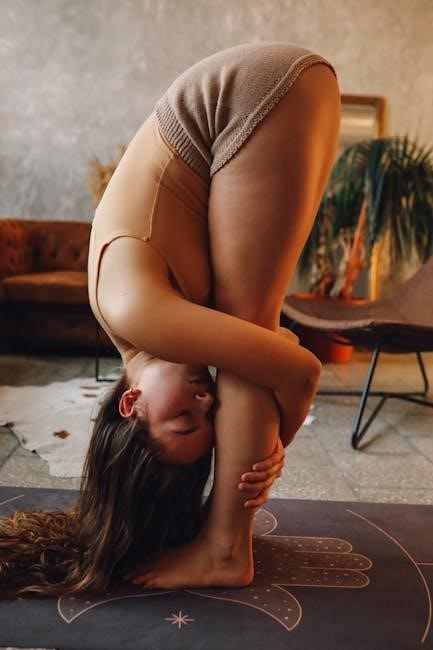
Pilates bar exercises PDF guides often begin with the Standing Roll Down, a foundational movement for spinal articulation. Begin standing tall, feet hip-width apart, holding the Pilates bar with a wide grip.
Inhale deeply, then exhale as you slowly roll down, vertebra by vertebra, keeping your core engaged and back straight. Allow the bar to gently hang towards the floor, maintaining a slight bend in your knees.
Focus on lengthening your spine with each exhale. Inhale at the bottom, then exhale as you slowly roll back up, stacking each vertebra until you return to a standing position; Many PDFs emphasize controlled movement and proper form over range of motion, especially for beginners. Repeat 8-10 times.
Chest Expansion with Pilates Bar
Pilates bar exercises PDF resources frequently include the Chest Expansion to improve posture and upper body strength. Begin standing with feet hip-width apart, holding the Pilates bar horizontally in front of your chest with a neutral grip.
Inhale deeply as you press the bar forward, extending your arms straight out in front of you while squeezing your shoulder blades together. Focus on opening your chest and maintaining a straight back.
Exhale as you slowly return the bar to the starting position, controlling the movement and resisting the bar’s pull. PDF guides often highlight the importance of engaging core muscles throughout the exercise. Repeat 10-12 times, focusing on controlled breathing and proper form for optimal results.
Bicep Curl with Pilates Bar
Many pilates bar exercises PDF guides showcase the Bicep Curl as a fantastic upper body toner. Start standing with feet shoulder-width apart, holding the Pilates bar with an underhand grip, palms facing upwards. Keep your elbows close to your sides throughout the movement.
Inhale as you slowly curl the bar upwards towards your shoulders, contracting your biceps. Maintain a controlled motion, avoiding swinging or using momentum. Exhale as you slowly lower the bar back to the starting position, resisting the downward pull.
PDF resources emphasize keeping your core engaged and back straight. Aim for 10-15 repetitions, focusing on isolating the bicep muscles for a more effective workout. Proper form is key to prevent injury.
Intermediate Pilates Bar Exercises
Pilates bar exercises PDF resources often include twists, side bends, and overhead presses for increased challenge, building strength and stability.
These routines demand greater core control and coordination, progressing beyond beginner-level movements.
Pilates Bar Twists
Pilates bar twists are a fantastic intermediate exercise, frequently detailed in pilates bar exercises PDF guides. To perform, stand with feet shoulder-width apart, holding the bar across your upper back.
Engage your core and gently twist your torso from side to side, keeping your hips stable and your back straight. The bar adds resistance, intensifying the oblique work.
Many printable workouts suggest 10-15 repetitions per side. Focus on controlled movements, feeling the stretch in your obliques with each twist.
Proper form is crucial; avoid jerky motions. These twists enhance spinal mobility and core strength, often included in comprehensive at-home pilates routines.
Remember to breathe deeply throughout the exercise!
Side Bends with Pilates Bar
Side bends with a Pilates bar are a key intermediate exercise, commonly found within detailed pilates bar exercises PDF resources. Begin standing with feet hip-width apart, securely holding the bar across your upper back or shoulders.
Maintaining a straight back and engaged core, slowly bend to one side, feeling a stretch along your obliques. Avoid leaning forward or backward; focus on a lateral bend.
Return to the center and repeat on the opposite side. Printable guides often recommend 10-15 repetitions per side.
The bar’s resistance increases the challenge, strengthening your core and improving spinal flexibility. Proper form prevents strain; controlled movements are essential.
Breathe deeply throughout the exercise for optimal results!
Overhead Press with Pilates Bar
The overhead press with a Pilates bar is an excellent intermediate exercise, frequently detailed in comprehensive pilates bar exercises PDF guides. Start standing with feet shoulder-width apart, firmly gripping the bar with an overhand grip, elbows bent at shoulder height.
Engage your core and slowly press the bar straight overhead, extending your arms fully but avoiding locking your elbows. Maintain a neutral spine throughout the movement, preventing arching of the back.
Lower the bar back to the starting position with controlled resistance.
Many PDFs suggest 10-12 repetitions for optimal results. This exercise builds shoulder strength and improves upper body posture. Focus on controlled movements and proper form to maximize effectiveness and prevent injury.
Remember to breathe consistently!
Advanced Pilates Bar Exercises
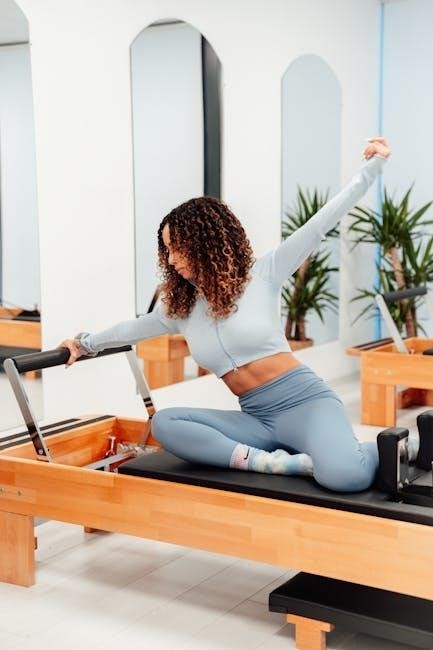
Pilates bar exercises PDF resources showcase challenging movements like squats, lunges, and roll outs, demanding core strength and precise form for effective results.
Pilates Bar Squats
Pilates Bar Squats, detailed in many pilates bar exercises PDF guides, elevate the traditional squat by adding resistance and focusing on form. Begin by holding the Pilates bar across your upper back, maintaining a neutral spine. Feet should be hip-width apart, toes slightly outward.
As you lower into a squat, keep your core engaged and back straight, ensuring your knees track over your toes. The bar adds a challenge, promoting deeper muscle engagement in your glutes, quads, and core. Many printable workouts suggest variations, like pulse squats or adding a rotational element.
Proper form is crucial; PDF resources often include visual cues and modifications for different fitness levels. Focus on controlled movements, avoiding any strain on your lower back. This exercise builds lower body strength and improves overall stability.
Lunges with Pilates Bar
Lunges with Pilates Bar, frequently illustrated in pilates bar exercises PDF downloads, are a fantastic way to build lower body strength and improve balance. Position the Pilates bar across your upper back, similar to a squat setup, maintaining good posture. Step forward with one leg, lowering your body until both knees are bent at 90-degree angles.
Ensure your front knee stays aligned over your ankle and your back knee doesn’t touch the ground. The bar’s resistance intensifies the workout, targeting glutes, quads, and hamstrings. PDF guides often demonstrate variations like walking lunges or reverse lunges.
Focus on controlled movements and core engagement throughout the exercise. Printable resources emphasize proper form to prevent injury and maximize effectiveness. This exercise enhances stability and functional strength.
Pilates Bar Roll Out
Pilates Bar Roll Outs, detailed in many pilates bar exercises PDF guides, are an advanced core exercise demanding significant abdominal strength and control. Begin kneeling, holding the Pilates bar with both hands, arms extended. Slowly roll the bar forward, extending your arms while maintaining a rounded back and engaging your core.
The key is to avoid arching your back; focus on initiating the movement from your abdominal muscles. Roll out as far as you can control, then slowly roll back to the starting position. PDF resources often include modifications for beginners, like limiting the range of motion.
This exercise strengthens the entire core, improves spinal stability, and enhances body awareness. Proper form, as emphasized in printable materials, is crucial to prevent lower back strain.
Creating a Pilates Bar Workout Routine
Pilates bar exercises PDF resources provide structured routines, blending warm-ups, targeted exercises, and cool-downs for a full-body workout at home.
Utilize printable guides to design a personalized plan, adjusting intensity based on fitness level and goals.
Warm-up Exercises
Pilates bar exercises PDF guides often emphasize the importance of a thorough warm-up to prepare muscles and joints for more intense movements. Begin with gentle arm circles, holding the Pilates bar with a light grip, to increase blood flow and range of motion in the shoulders.
Follow this with torso twists, maintaining a stable core, to improve spinal mobility. Leg swings, using the bar for balance if needed, are excellent for warming up the hips and hamstrings.
Include cat-cow stretches, performed with or without the bar, to articulate the spine and enhance flexibility. A few minutes of marching in place, lightly holding the bar, can elevate your heart rate and further prepare your body for the workout ahead. Remember to focus on controlled movements and deep breathing throughout the warm-up phase.
Cool-down Exercises
Pilates bar exercises PDF resources consistently highlight the necessity of a cool-down to gradually lower your heart rate and promote muscle recovery. Begin with gentle stretches, holding each for 20-30 seconds. Focus on areas worked during the workout, such as hamstrings, biceps, and core.
Include seated hamstring stretches, using the Pilates bar for gentle assistance if needed, and triceps stretches, reaching one arm overhead and bending at the elbow. Spinal twists, performed slowly and with control, can release tension in the back.
Finish with deep breathing exercises, focusing on diaphragmatic breathing to calm the nervous system. A mindful cool-down helps prevent muscle soreness and enhances the overall benefits of your Pilates bar workout. Prioritize relaxation and controlled movements during this phase.
Pilates Bar vs. Other Pilates Equipment
Pilates bar exercises PDF guides demonstrate how the bar offers portability and affordability compared to reformers or even mat Pilates with added resistance.
It’s a versatile tool for home workouts, bridging the gap between basic mat work and more complex studio equipment.
Pilates Bar vs. Reformer
Pilates bars and reformers both aim to enhance core strength and flexibility, but differ significantly in complexity and cost. Reformers, a staple in Pilates studios, utilize springs and a carriage system for a dynamic, full-body workout, often requiring professional instruction for safe and effective use.
Conversely, a Pilates bar provides a more accessible and affordable option for home practice. While it doesn’t replicate the reformer’s extensive range of motion or adjustable resistance, Pilates bar exercises PDF resources demonstrate how it effectively targets similar muscle groups.
You can find printable routines offering a focused, resistance-based workout. The bar’s portability and lower price point make it ideal for those seeking a convenient way to supplement or replace studio classes, though it lacks the reformer’s advanced capabilities.
Pilates Bar vs. Mat Pilates
Mat Pilates, the foundational form, relies on bodyweight for resistance, emphasizing precise movements and core engagement; It’s incredibly accessible, requiring only a mat and minimal space, making it perfect for beginners and travel. However, it offers limited options for progressive overload.
A Pilates bar introduces external resistance, enhancing the challenge and allowing for increased muscle activation. While still adaptable for home use, it bridges the gap between mat work and more advanced equipment like the reformer. Searching for Pilates bar exercises PDF reveals routines that build upon mat Pilates principles.
The bar adds intensity to familiar movements, promoting strength gains and improved muscle tone. It’s a valuable tool for those seeking to progress beyond bodyweight exercises, offering a versatile and portable way to deepen their Pilates practice.
Finding Pilates Bar Exercise PDFs
Numerous online resources offer Pilates bar exercises PDF downloads, ranging from free printable workouts to comprehensive, paid programs for structured training.
Free Printable Pilates Bar Workouts
The internet provides a wealth of free Pilates bar workout PDFs, catering to various fitness levels. Many fitness blogs and websites offer downloadable routines, often showcasing beginner-friendly sequences to introduce users to the equipment.
These free resources frequently include illustrated guides detailing proper form for exercises like standing roll downs, bicep curls, and chest expansions. Searching for “Pilates bar exercises PDF” yields numerous options, including short, focused routines targeting specific muscle groups.
However, quality can vary, so it’s wise to select PDFs from reputable sources. Social media platforms like Pinterest also host collections of free Pilates bar workouts, often linking to downloadable PDFs or detailed exercise instructions. Remember to prioritize safety and proper technique when following any free workout plan.
Paid Pilates Bar Workout Programs
While numerous free Pilates bar exercises PDF options exist, paid programs offer structured, progressive training with enhanced features. These often include professionally designed workout calendars, detailed video demonstrations, and personalized guidance.
Subscription-based fitness platforms, like ClassPass or dedicated Pilates apps, frequently incorporate Pilates bar routines into their offerings. These programs may provide access to live classes or on-demand video libraries, allowing for a more interactive experience.
Investing in a paid program can be beneficial for individuals seeking a comprehensive and tailored approach to their Pilates bar training. They often include modifications for different fitness levels and address specific goals, such as strength building or flexibility improvement. Look for programs with qualified instructor credentials and positive user reviews.