

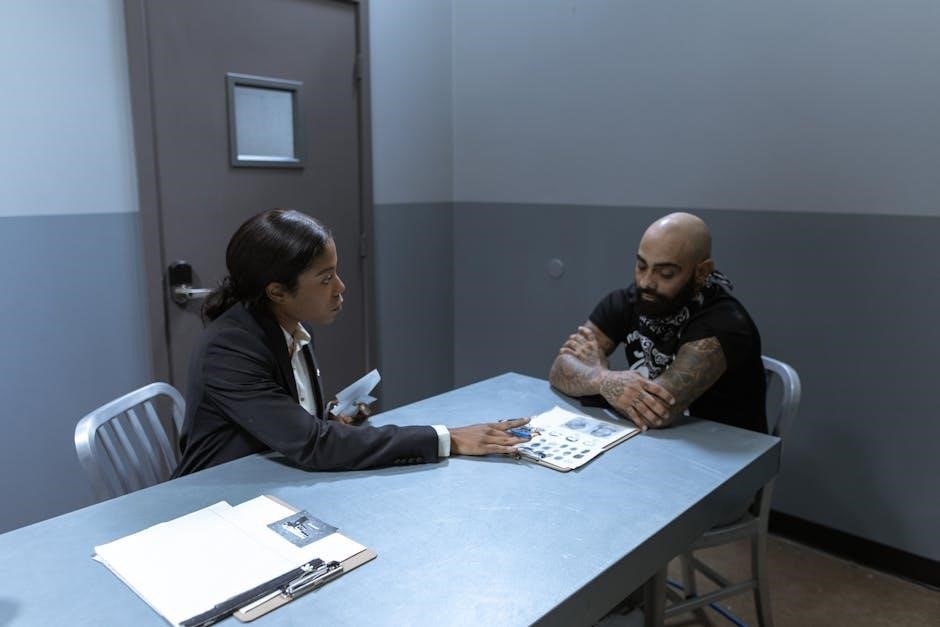
Police recruitment increasingly utilizes competency-based interviews. These assessments evaluate candidates beyond qualifications‚ focusing on past behaviors.
Successful applicants demonstrate key skills vital for effective policing‚ as evidenced by numerous online resources and guides.
What are Competency-Based Interviews?
Competency-based interviews (CBIs) are structured assessments designed to evaluate a candidate’s skills and behaviors against pre-defined competencies crucial for a specific role – in this case‚ policing. Unlike traditional interviews focusing on hypothetical scenarios‚ CBIs delve into past experiences. Interviewers seek concrete examples demonstrating how a candidate has successfully navigated challenges and exhibited desired traits.
These interviews aren’t about “what you would do‚” but rather “what you have done.” The core principle rests on the belief that past behavior is the best predictor of future performance. Police forces utilize CBIs to identify candidates possessing qualities like integrity‚ problem-solving abilities‚ communication skills‚ and resilience. Preparation often involves reviewing common competencies and formulating responses using the STAR method (Situation‚ Task‚ Action‚ Result)‚ readily available in numerous ‘police competency based interview questions and answers pdf’ guides.
Why are they used in Police Recruitment?
Police recruitment demands individuals capable of handling complex‚ high-pressure situations with professionalism and sound judgment. Traditional interview methods often fall short in reliably identifying these qualities. Competency-based interviews (CBIs) address this by focusing on demonstrable skills and behaviors essential for effective policing.
CBIs offer a more objective and standardized assessment process‚ reducing bias and improving the prediction of on-the-job performance. They help identify candidates who possess not only the necessary qualifications but also the character traits vital for maintaining public trust and upholding the law. Resources like ‘police competency based interview questions and answers pdf’ highlight the specific competencies valued by police forces. Utilizing CBIs ensures a more robust selection process‚ leading to a more capable and ethical police workforce‚ ultimately enhancing community safety and trust.

Understanding the STAR Method
The STAR method is crucial for answering competency-based questions. It provides a structured approach – Situation‚ Task‚ Action‚ Result – to showcase relevant skills‚ as detailed in ‘police competency based interview questions and answers pdf’ guides.
What is the STAR Method?
The STAR method is a structured technique used to answer behavioral interview questions‚ commonly found in ‘police competency based interview questions and answers pdf’ resources. It helps you provide clear‚ concise‚ and compelling examples of your past experiences. STAR stands for Situation‚ describing the context of the event; Task‚ outlining your responsibility within that situation; Action‚ detailing the specific steps you took to address the task; and finally‚ Result‚ explaining the outcome of your actions and what you learned.
This method moves beyond simply stating you possess a skill; it demonstrates it through concrete evidence. Interviewers want to understand how you’ve behaved in specific scenarios‚ as this is a strong predictor of future performance. Utilizing STAR ensures you cover all necessary details‚ preventing vague or incomplete answers. Many preparation guides emphasize practicing STAR responses to common police recruitment questions‚ ensuring a confident and effective interview performance.
Applying STAR to Police Interview Questions
Effectively applying the STAR method to ‘police competency based interview questions and answers pdf’ examples is crucial for success. When faced with a question like “Tell me about a time you showed initiative‚” don’t just say you’re proactive. Instead‚ detail the Situation – a specific challenge faced. Explain the Task – your responsibility in addressing it. Then‚ meticulously describe the Action you took‚ focusing on your individual contribution.
Finally‚ articulate the Result – the positive outcome achieved and what you learned. Preparation resources often highlight tailoring STAR responses to align with the core values of policing: integrity‚ courage‚ and public service. Remember to quantify results whenever possible (e.g.‚ “reduced response time by 15%”). Practicing with sample questions‚ readily available in online guides‚ will build confidence and ensure a structured‚ impactful delivery during your interview.

Common Police Competency Areas
Key areas assessed include leadership‚ problem-solving‚ communication‚ integrity‚ and resilience. ‘Police competency based interview questions and answers pdf’ resources emphasize demonstrating these skills through behavioral examples.

Leadership and Teamwork
Police work is rarely a solo endeavor; effective leadership and seamless teamwork are paramount. Interviewers seek candidates who can inspire‚ motivate‚ and collaborate effectively within a team structure. ‘Police competency based interview questions and answers pdf’ materials consistently highlight scenarios testing these abilities.
Expect questions probing your experience in guiding others‚ resolving conflicts within a team‚ and contributing to shared goals. Be prepared to detail instances where you took initiative‚ delegated tasks appropriately‚ and fostered a positive team environment. Demonstrating an understanding of different leadership styles and adapting your approach based on the situation is crucial.
Furthermore‚ showcasing your ability to follow instructions‚ support colleagues‚ and contribute to a cohesive unit is vital. Interviewers want to see evidence of your capacity to both lead and be a supportive team member‚ recognizing that both roles are essential for successful policing. Prepare specific examples using the STAR method to illustrate these competencies.
Problem-Solving and Decision-Making
Policing demands rapid assessment and effective resolution of complex situations. Interviewers prioritize candidates demonstrating strong analytical skills and sound judgment under pressure. Resources like ‘police competency based interview questions and answers pdf’ emphasize the importance of showcasing these abilities.
Expect questions requiring you to describe scenarios where you identified a problem‚ analyzed available information‚ considered various solutions‚ and made a decisive choice. Be prepared to articulate your thought process‚ explaining the rationale behind your decision and any potential consequences you considered.
Highlighting your ability to remain calm and logical in stressful circumstances is crucial. Demonstrating a proactive approach to problem-solving‚ rather than simply reacting to events‚ will also impress the panel. Illustrate your capacity for critical thinking‚ attention to detail‚ and the ability to learn from past experiences when facing challenging situations. The STAR method is essential for structuring your responses effectively.
Communication and Interpersonal Skills
Effective communication is paramount in policing‚ encompassing active listening‚ clear articulation‚ and empathy. Interviewers assess your ability to build rapport‚ de-escalate tense situations‚ and convey information accurately to diverse audiences. Many ‘police competency based interview questions and answers pdf’ guides stress this area.

Prepare to discuss instances where you successfully communicated complex information to someone with limited understanding‚ or navigated a challenging conversation with a distressed individual. Demonstrate your ability to adapt your communication style to suit the context and audience.
Highlight your skills in conflict resolution‚ negotiation‚ and building trust. Show how you’ve used non-verbal cues effectively and maintained professionalism even under pressure. Emphasize your capacity for active listening and understanding different perspectives. The ability to collaborate effectively with colleagues and members of the public is also highly valued‚ showcasing strong interpersonal abilities.
Integrity and Ethical Conduct
Policing demands unwavering integrity and a commitment to ethical behavior. Interviewers will rigorously assess your moral compass and ability to uphold the highest standards of professionalism. Numerous ‘police competency based interview questions and answers pdf’ resources emphasize this crucial area.
Prepare to discuss scenarios where you faced an ethical dilemma and how you navigated it‚ prioritizing honesty and fairness. Be ready to explain your understanding of police misconduct and your commitment to reporting any wrongdoing you witness.
Demonstrate your ability to remain impartial‚ resist undue influence‚ and make decisions based on principles rather than personal gain. Highlight instances where you demonstrated courage in challenging unethical behavior. Emphasize your understanding of the importance of public trust and your dedication to maintaining the reputation of the police force. Transparency and accountability are key.
Resilience and Emotional Intelligence
Policing is inherently stressful; therefore‚ resilience and emotional intelligence are paramount. Interviewers seek candidates who can manage pressure‚ cope with trauma‚ and maintain composure in challenging situations. Many ‘police competency based interview questions and answers pdf’ guides highlight this critical competency.
Prepare to discuss times you faced adversity and how you overcame it‚ demonstrating your ability to bounce back from setbacks. Be ready to articulate your self-awareness‚ empathy‚ and ability to understand and manage your own emotions‚ as well as those of others.
Showcase your coping mechanisms for dealing with stress and your ability to maintain a positive outlook. Highlight instances where you demonstrated emotional regulation and conflict resolution skills. Emphasize your understanding of the importance of self-care and seeking support when needed. A calm and measured response is vital.

Frequently Asked Questions & Sample Answers
Numerous resources‚ including ‘police competency based interview questions and answers pdf’ guides‚ offer common questions and effective response strategies. Preparation is key to success!
Question 1: Tell me about a time you had to deal with a difficult person.
During a volunteer role at a community event‚ I encountered an individual aggressively disputing parking arrangements. He was verbally upset and attracting negative attention. Recognizing de-escalation was crucial‚ I calmly approached‚ actively listening to his concerns without interruption.
I acknowledged his frustration and explained the limited parking‚ offering alternative solutions like a nearby shuttle service.
He initially remained agitated‚ but my patient and respectful demeanor gradually diffused the situation. I maintained a professional boundary while empathizing with his inconvenience. Ultimately‚ he accepted the shuttle option and thanked me for my assistance.
This experience reinforced the importance of active listening‚ empathy‚ and remaining composed under pressure – skills directly applicable to policing. It highlighted that effective communication can often resolve conflict without escalation‚ a vital competency for a police officer.
Question 2: Describe a situation where you had to make a quick decision under pressure.
While working as a lifeguard‚ I observed a swimmer struggling significantly beyond the designated swimming area. Simultaneously‚ another swimmer alerted me to a minor injury requiring first aid. Assessing both situations instantly‚ I prioritized the distressed swimmer as a life-threatening emergency.
I immediately initiated the rescue protocol‚ alerting colleagues and entering the water. While swimming towards the struggling individual‚ I quickly assessed their condition – exhaustion and panic. Reaching them‚ I secured them with a rescue buoy and towed them safely back to shore.
My colleague efficiently addressed the minor injury. This experience demonstrated my ability to rapidly evaluate risk‚ prioritize effectively‚ and act decisively under intense pressure – crucial skills for a police officer facing unpredictable situations requiring immediate action and sound judgment.
Question 3: Give an example of when you showed leadership skills.
During a university group project focused on community safety‚ our team faced significant disagreements regarding the project’s direction and task allocation. Morale was low‚ and progress stalled. Recognizing the need for intervention‚ I volunteered to facilitate a team meeting.
I actively listened to each member’s concerns‚ acknowledging their perspectives and identifying common ground. I then proposed a revised project plan‚ clearly outlining individual responsibilities and establishing realistic deadlines. Crucially‚ I encouraged collaborative problem-solving‚ fostering a sense of shared ownership.
This approach successfully re-engaged the team‚ leading to a productive workflow and a high-quality final presentation. This experience highlighted my ability to mediate conflict‚ motivate others‚ and guide a team towards a successful outcome – skills essential for leadership within a police force.
Question 4: How do you handle stress and maintain composure?
Furthermore‚ I practice mindfulness techniques‚ such as deep breathing exercises‚ to remain grounded and focused during challenging moments. I also prioritize maintaining a strong support network of family and friends‚ allowing me to openly discuss concerns and gain perspective.
In past roles‚ I’ve learned to compartmentalize stressful situations‚ focusing on immediate tasks and avoiding dwelling on uncontrollable factors. Maintaining composure is paramount; I believe a calm demeanor inspires confidence in others and facilitates rational decision-making.
Question 5: Describe a time you made a mistake and what you learned from it.
During a volunteer role coordinating a community event‚ I underestimated the logistical challenges of securing permits. I assumed a simplified process‚ failing to thoroughly research local regulations. This resulted in a last-minute scramble to obtain necessary approvals‚ causing significant stress and requiring considerable overtime from my team.
I immediately took responsibility for the oversight‚ apologizing to my colleagues and proactively working to rectify the situation. The experience highlighted the critical importance of meticulous planning and proactive risk assessment.
I now consistently create detailed checklists‚ consult with experienced individuals‚ and prioritize thorough research before initiating any project. This mistake instilled in me a greater appreciation for attention to detail and the value of seeking guidance – lessons I believe are directly transferable to the demands of policing.

Preparing for Your Interview
Thorough preparation is key to success. Research the specific police force‚ understand their values‚ and practice articulating examples using the STAR method. Confidence builds competence!
Researching the Police Force
Deeply understanding the force you’re applying to is paramount. Don’t simply skim the “About Us” page; delve into their mission statement‚ core values‚ and recent initiatives. Explore their website thoroughly‚ paying attention to community engagement programs and specific challenges they face.
Investigate local news reports to understand the current policing landscape in that area. What are the prevalent crime types? What are the community’s concerns? Demonstrating awareness of these factors showcases genuine interest and proactive thinking.
Furthermore‚ research the force’s strategic priorities. Many forces publish detailed plans outlining their goals for the coming years. Aligning your skills and experiences with these priorities will significantly strengthen your application. Knowing their history and structure also demonstrates dedication. This preparation will allow you to tailor your answers during the competency-based interview‚ highlighting how you can contribute to their specific objectives.
Practicing Your Answers
Rehearsing your responses is crucial‚ but avoid rote memorization. The goal isn’t to recite pre-prepared scripts‚ but to articulate your experiences confidently and concisely using the STAR method. Practice aloud‚ simulating the interview environment as closely as possible. Record yourself to identify areas for improvement – pacing‚ clarity‚ and body language.

Focus on identifying key competencies the police force values (leadership‚ teamwork‚ problem-solving‚ integrity). Then‚ brainstorm specific examples from your past that demonstrate these skills. Don’t limit yourself to professional experiences; relevant examples from education‚ volunteering‚ or personal life are valuable.
Seek feedback from trusted friends or mentors. Ask them to role-play as the interviewer and provide constructive criticism. Regularly reviewing sample competency-based questions and answers (available in numerous online guides) will further refine your approach and boost your confidence.
Understanding the Values of Policing
Demonstrating alignment with core policing values is paramount. Forces prioritize integrity‚ impartiality‚ public service‚ and professionalism. Research the specific force’s mission statement and values – these are often prominently displayed on their recruitment website. Tailor your answers to reflect these principles‚ showcasing how your personal values resonate with theirs.
Consider the ethical dilemmas inherent in policing. Be prepared to discuss scenarios requiring sound judgment and ethical decision-making. Highlight your commitment to fairness‚ accountability‚ and respect for all members of the community. Understanding the principles of procedural justice – treating people with dignity and respect – is also vital.
Review relevant codes of conduct and ethical guidelines. This demonstrates your proactive approach to understanding the responsibilities of a police officer and your dedication to upholding the highest standards of professional behavior.
Resources for Further Preparation
Numerous online resources aid preparation. Police recruitment websites offer guidance‚ while competency-based interview guides (often in PDF format) provide sample questions. Online practice tests refine your technique.
Police Recruitment Websites
Navigating official police force websites is crucial for preparation. These platforms frequently host dedicated recruitment sections detailing the application process‚ competency frameworks‚ and interview expectations. Many forces provide example interview questions‚ sometimes even offering downloadable PDF guides specifically focused on competency-based interviews.
Look for sections outlining the values of the force – understanding these will help tailor your responses. Websites often feature videos showcasing officers discussing their roles and the qualities they possess.
Beyond force-specific sites‚ national recruitment portals (like those used for graduate schemes) can offer broader advice on competency-based interviewing techniques applicable to policing. Remember to check for updated information regarding application deadlines and any changes to the interview format. Thorough website exploration provides a significant advantage‚ revealing insights not always available elsewhere. Don’t overlook the ‘careers’ or ‘join us’ sections of each police force’s main webpage.
Competency-Based Interview Guides (PDFs)
Numerous downloadable PDF guides offer targeted preparation for police competency-based interviews. These resources typically present common competency areas – leadership‚ teamwork‚ problem-solving‚ communication‚ integrity – alongside sample questions and suggested answer structures‚ often utilizing the STAR method.
Searching online for “police competency interview questions PDF” yields a wealth of materials from recruitment agencies‚ career advice websites‚ and even former police officers sharing their experiences.
Be discerning; prioritize guides from reputable sources. Look for PDFs that provide detailed explanations of each competency and offer multiple example questions. Some guides include scoring rubrics‚ illustrating how answers are evaluated. Remember that these are examples – avoid rote memorization and focus on adapting the STAR framework to your own experiences. Utilizing several PDFs provides a comprehensive understanding of potential questions and expected response quality.
Online Practice Tests
Several websites offer online practice tests specifically designed for police competency-based interviews. These platforms simulate the interview environment‚ presenting timed questions and often providing immediate feedback on your responses. Many tests focus on the core competencies assessed during recruitment – problem-solving‚ communication‚ and ethical decision-making.
While fewer offer downloadable “police competency interview questions and answers PDF” directly‚ these tests are invaluable for refining your technique. They help you become comfortable articulating your experiences using the STAR method under pressure.
Look for platforms that allow you to record and review your answers‚ identifying areas for improvement. Some services offer personalized feedback from experienced interviewers. Remember to supplement practice tests with thorough preparation using PDF guides and real-life examples. Consistent practice builds confidence and ensures you present yourself effectively during the actual interview process.